
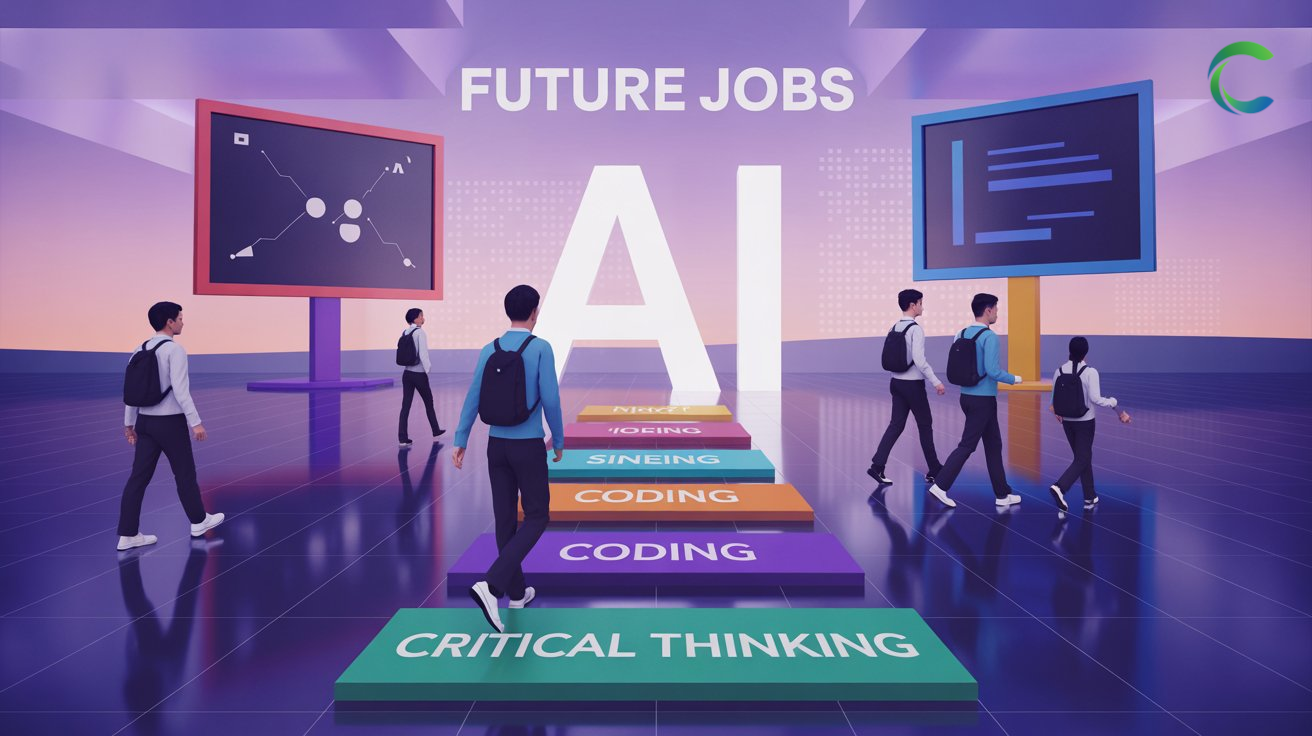
In an era where automation, global connectivity, and rapid technological change are reshaping the job market, preparing students just through textbooks and rote learning is no longer enough. Educational systems, especially those guided by NCERT in India, must evolve to equip students with AI and coding skills for students, along with critical thinking in students, so that learners can thrive in future employment landscapes dominated by technology and innovation.
Why future jobs demand new skills
The future job market, both in India and globally, is increasingly favoring workers who combine technical knowledge with soft skills. Some reasons:
- AI in education and automation are not just buzzwords, but real forces transforming how tasks are done in workplaces. Employees who understand AI, its possibilities and ethical constraints, will be more employable.
- Coding for students is no longer optional: even non-technical careers benefit when an individual understands logical thinking, structure, algorithmic reasoning, and basic programming.
- Employers also mention skills like creativity, communication, collaboration, and especially critical thinking in students as essential components of employability skills. These help in problem solving, decision making, and adapting to change.
- Educational frameworks like the 21st century skills agenda emphasise integrating such skills into school curricula. NCERT and CBSE have both introduced policy documents focusing on life skills, digital literacy, problem solving, etc.
What NCERT & the Current Policy Landscape Say
NCERT and Indian education policy recognize the need for incorporating 21st century skills. Some highlights:
- The NCERT annual report 2022-23 lists communication, problem solving, decision making, teamwork, critical thinking as key components for employability and life skills.
- CBSE launched its “Handbook on 21st Century Skills,” which encourages blending critical thinking, creativity, collaboration, and communication into core subject teaching.
- The revised NCERT / NEP-inspired curriculum aims to reduce rote learning and increase skill-based learning, creativity, digital literacy, and experiential methods. This offers an opportunity to integrate AI in education, coding for students, and critical thinking in students seamlessly.
So, there is strong policy backing. The question is: how to implement this on the ground, in everyday schooling under the NCERT framework.
How to Infuse AI, Coding & Critical Thinking into NCERT Routine

1. Revise lesson plans to include small modules on AI & Coding
- Include short lessons or class periods where students are introduced to AI concepts: What is artificial intelligence? How is it used in everyday tools (smartphones, recommendation systems)? This builds familiarity with AI in education early on.
- Coding can be introduced through block-based programming (like Scratch) or simple robotics or coding clubs. Through “Coding for students”, even basic tasks like logic puzzles, pattern recognition, or algorithmic thinking help.
- Integrate coding tasks within existing NCERT subjects: e.g. in Maths classes, students can write simple programs or pseudocode for problem solving; in Science, data interpretation using coding tools.
2. Promote critical thinking in students through classroom activities
- Use question formats that require analysis, evaluation, inference rather than just recall. For example, ask why and how questions, not just “What is?”
- Use project-based learning where students apply knowledge. For example, a group project to design an AI-based app/solution for a real school issue (waste management, school scheduling etc.)
- Debates, peer review, design thinking workshops: all help build critical thinking in students, as they must consider different viewpoints, evidence, and make reasoned arguments.
3. Use extracurricular & beyond-syllabus learning
- Coding clubs, hackathons, AI workshops: These give students exposure beyond textbook. It builds passion and real skills.
- Online courses (MOOCs) and workshops on AI tools, machine learning basics. For example, platforms offering free / affordable coding courses (Python, data science) are useful.
- Encourage competitions that reward innovation and creative problem solving — science fairs, coding challenges, critical thinking competitions.
4. Leverage technology & digital resources
- Use EdTech tools that support AI in education: adaptive learning platforms, AI tutors, tools that personalise learning pace and content.
- Integrate digital classrooms, simulations, coding platforms where students can write code or use logic games. These help with both coding for students and critical thinking.
- Teach responsible / ethical use of AI. Students should understand bias, data privacy, AI ethics. This increases their digital literacy and aligns with policy aims.
5. Teacher training & curriculum reform
- Teachers need professional development in 21st century pedagogies: coding, AI tools, project-based methods, fostering critical thinking.
- NCERT textbooks need supplementary teacher’s guides that include suggestions for coding tasks, AI examples, critical thinking questions.
- Assessments should evolve: fewer rote-based exams, more application-based, open-ended questions that test thinking.
Challenges & How to Overcome Them

| Challenge | Possible Solution |
|---|---|
| Lack of teacher familiarity with AI or coding | Regular workshops, online training programs, peer mentoring |
| Resource constraints in schools (low tech) | Use simple tools, free software, offline coding kits, partnerships with NGOs or EdTech providers |
| Overcrowded syllabus / time pressure | Embed skills into existing subjects rather than adding separate subjects; use cross-subject projects |
| Inequality in access to digital devices | Government schemes, shared labs, community centres; blended learning methods |
The Payoff: What Students Gain
By incorporating AI and coding skills for students, critical thinking in students, and 21st century skills into NCERT education, students stand to gain significantly:
- Better employability skills — future employers will value adaptability, technical literacy, creativity, and problem solving.
- Improved ability to tackle complex real-world problems, not just manage textbook questions.
- More confidence in using technology, making them more independent learners.
- Higher engagement and motivation: learning becomes less about memorization and more about doing, thinking, creating.
Real-Life Examples & Pilot Successes
- Some NCERT / state board schools have started pilot coding programs or AI awareness workshops, integrating coding clubs and making use of digital literacy skills. (NCERT’s documents show digital literacy among prospective teachers is being assessed.)
- EdTech platforms in India are offering courses in AI in education, coding, and project-based learning that align with NCERT curriculum. Students using these tools show better conceptual clarity and motivation.
- NEP 2020 and CBSE’s Handbook on 21st Century Skills are formal steps already taken toward embedding these skills in routine schooling.
How Students Can Start NOW (Action Steps)
Here are things students (and parents / teachers) can do now without waiting for formal reforms:
- Enroll in coding classes or workshops during weekends or online.
- Try free AI courses—introduce yourself to tools like ChatGPT, image generation, basics of machine learning.
- Read and solve NCERT questions with “why” and “how” parts — don’t just memorize.
- Join or form clubs: coding club, robotics, debate, critical thinking challenge.
- Use digital tools / apps that support learning with feedback (adaptive practice, quizzes with explanations).
- Practice self-reflection: after every assignment/test, evaluate what thinking went well, where improvement is needed.
Conclusion
The future belongs to those who learn continuously and adapt. Incorporating AI and coding skills for students, critical thinking in students, and 21st century skills into NCERT education isn’t just policy—it’s necessity. Schools, teachers, parents, and students all have roles. When books, classrooms, and activities work together, students won’t just be ready for exams—they’ll be ready for life.